

Pollinator Solace Columns, 2022-23, collaboration with J Taylor Wallace
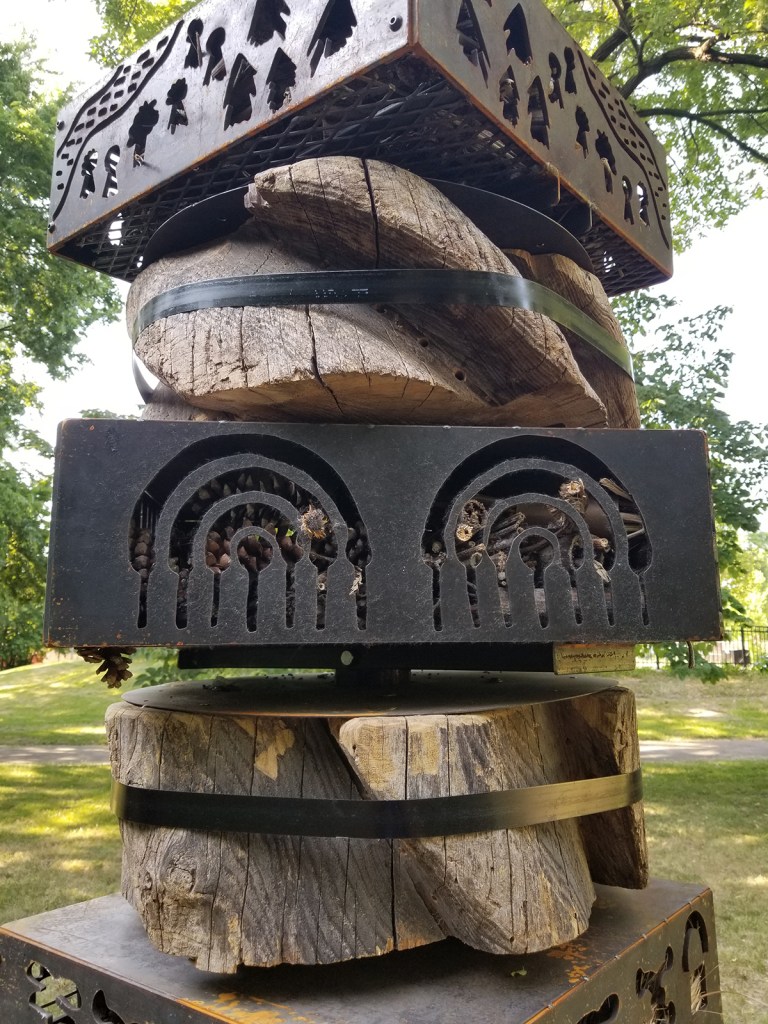
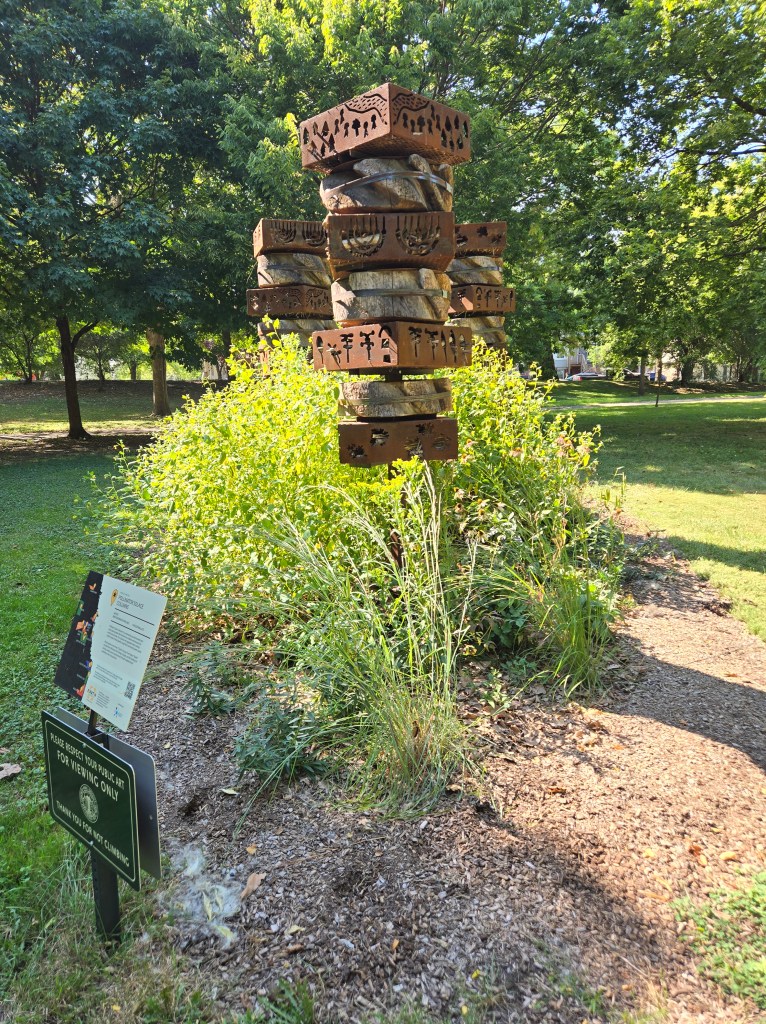
Native plant garden with Corten steel and locust stumps pollinator nests
Supported by the Illinois Science & Energy Innovation Foundation and in collaboration with Star Farms and Hermitage Community Gardens, the ‘Pollinator Solace Columns’ project is a community-sourced public artwork that functions as a habitat and resource for insects and animals.
Details: The “Pollinator Solace Columns” project is a community-sourced public artwork that functions as a habitat and resource for insects and animals. The artists’ inspiration for this project is driven by the need to support their garden pollinators and those of their neighbors. They believe everyone has a right to clean green spaces which pollinators help create.
Recognizing how urbanization has hurt critical wildlife and damaged resident’s health by doing so, this project creates a positive solution to this habitat destruction. Specifically the artists address concerns for the decimation of critical insects due to man-made hazards like pollution, rerouting of waterways, and over paved cities. With a partner collective the artists built an ecosystem that attempts to lessen the impact of these issues.
The sculpture is a series of three steel and wood columns surrounded by a native plant garden. The Corten steel sections encapsulate pollinator nesting cavities. These nesting boxes consist of gathered and dried garden waste from community partner green spaces. The wood pieces are recycled sections of a condemned locust tree from J Taylor’s Chicago Tree Project “Aspire”.
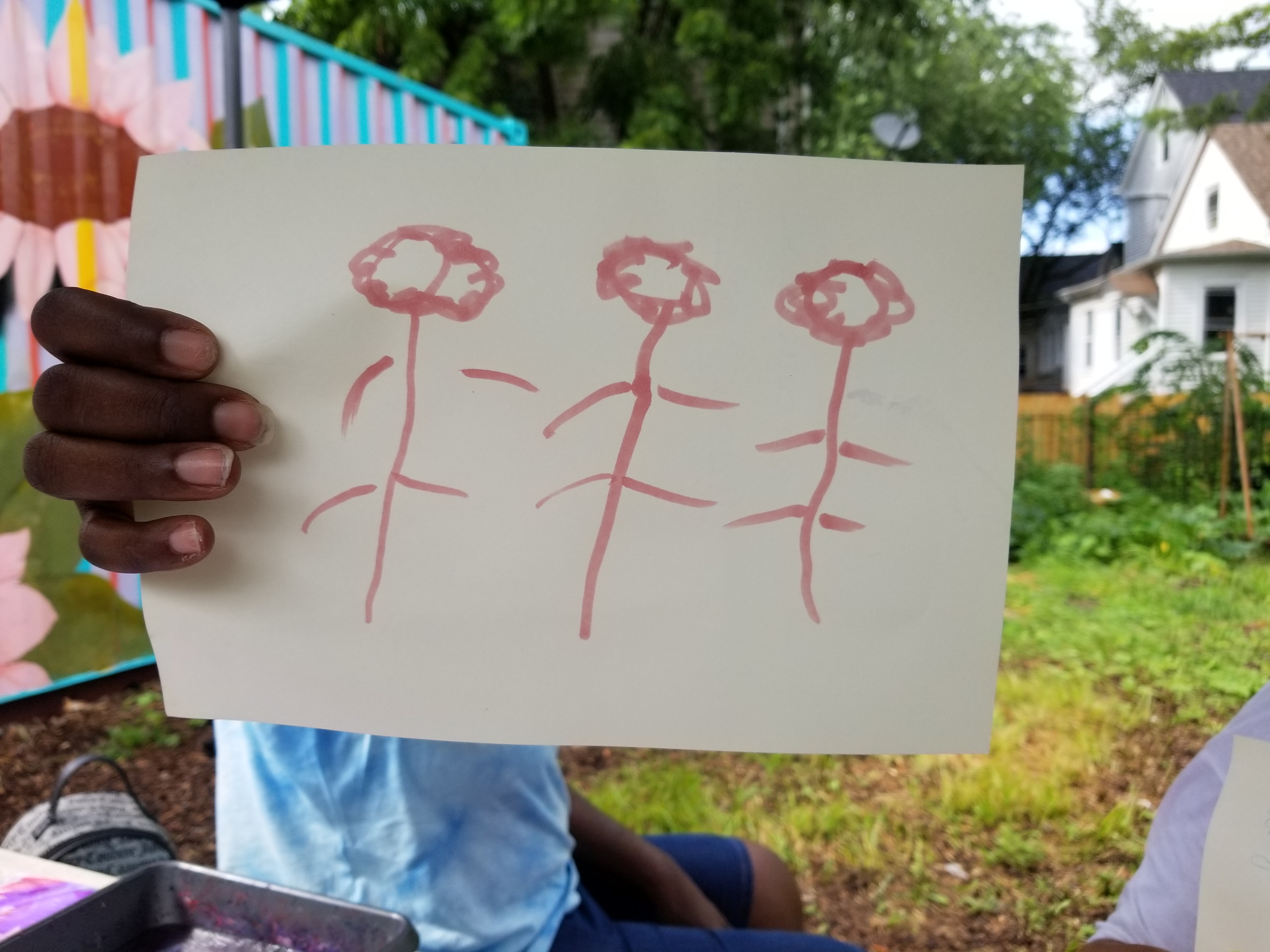
The artworks’ base structures reference cultural columns like totems, navigational pillars, decorative building posts, and sundials. These types of constructions have served as historic record keepers, way-finding devices, and time-keepers. Images in the steel are derived from community drawing sessions depicting vegetation, rainbows, and a forest scene. Inside the steel pieces are pollinator nests which were constructed during environmental education workshops. The garden was planted with assistance during these workshops as well.
Through hands-on educational activities, the artists provided tips, simple nest building instructions, and gave away plants to inspire positive home pollinator gardens. It is the artists’ hope that the collaborative (the artwork, partners, and programming participants) will increase pollinators roaming the area. This project hopes to unify the community voice in a statement of cooperation that together we can make an impact on our environment.
 Emily Moorhead-Wallace